The 7 Best Natural Sunscreen for Sun Protection in 2026
Table of Contents
I’ll never forget the day I found out that my favorite sunscreen contained ingredients I couldn’t even pronounce, let alone understand. As someone who spends countless hours outdoors hiking and gardening, I was slathering these chemicals on my skin daily without a second thought. That realization sent me down a rabbit hole of research into natural sunscreen alternatives—and what I discovered changed how I protect my skin forever.
If you’re reading this, you’re probably asking the same questions I did: What makes a sunscreen “natural”? Are natural sunscreens as effective as conventional ones? Which brands can I actually trust? Today, I’m sharing everything I’ve learned from two years of testing, researching, and consulting with dermatologists about natural sun protection.
Key Takeaways
- Natural sunscreens use mineral-based ingredients (zinc oxide and titanium dioxide) instead of chemical filters
- Mineral sunscreens provide immediate protection and are reef-safe
- The best natural sunscreens offer broad-spectrum SPF 30-50 protection
- Natural options work better for sensitive skin and are safer for children
- Modern formulations have eliminated the white cast problem
- Natural sunscreens protect both your skin and the environment
- Proper application (2mg per square cm) is crucial for effectiveness
What Makes Sunscreen “Natural”?
Before we dive into my top picks, let’s clarify what natural sunscreen actually means. The term can be confusing because there’s no official FDA definition of “natural” when it comes to sunscreen.
The Science Behind Natural vs. Chemical Sunscreen
Natural sunscreens—also called physical or mineral sunscreens—use two FDA-approved active ingredients:
Zinc Oxide – A mineral that sits on your skin’s surface and reflects UV rays like tiny mirrors. It provides broad-spectrum protection against both UVA and UVB rays.
Titanium Dioxide – Another mineral blocker that scatters and reflects UV radiation before it penetrates your skin.
These minerals work immediately upon application. Unlike chemical sunscreens that need 15-30 minutes to absorb and activate, mineral sunscreens provide instant protection.
Why I Switched to Natural Sunscreen
My journey to natural sunscreen wasn’t just about avoiding chemicals—though that was certainly part of it. Here’s what motivated my switch:
Environmental Impact – Chemical sunscreens containing oxybenzone and octinoxate contribute to coral reef bleaching. Hawaii and other locations have actually banned these ingredients.
Skin Sensitivity – After developing a rash from chemical sunscreen during a summer beach trip, I learned that mineral formulas rarely cause allergic reactions.
Hormone Concerns – Research suggests some chemical filters may act as endocrine disruptors. While the jury is still out, I prefer to err on the side of caution.
Transparency – Natural sunscreen brands typically use cleaner, more recognizable ingredient lists.
How Natural Sunscreen Actually Works
Understanding the mechanism helps explain why natural sunscreen is so effective. Think of chemical sunscreens as sponges that absorb UV radiation and convert it to heat. Natural sunscreens, on the other hand, act as shields that physically block and scatter UV rays away from your skin.
This physical barrier approach offers several advantages:
- Photostable – Doesn’t break down in sunlight like some chemical filters
- Broad spectrum – Naturally protects against both UVA (aging) and UVB (burning) rays
- Gentler – Sits on skin’s surface rather than absorbing into bloodstream
- Better for acne-prone skin – Less likely to clog pores
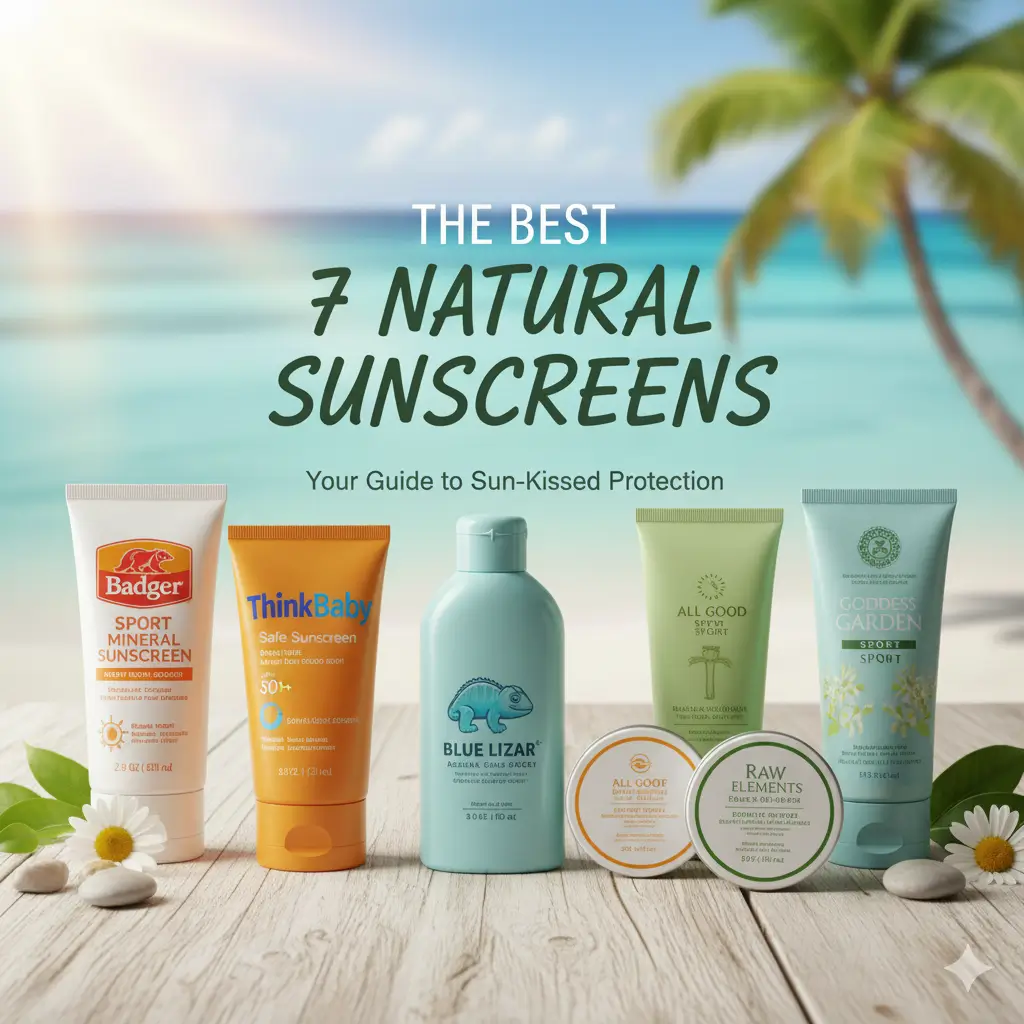
The 7 Best Natural Sunscreens I’ve Tested
After testing over 20 different natural sunscreens over two years, these seven consistently outperformed the rest. I evaluated them based on protection level, texture, white cast, water resistance, and ingredient quality.
1. Badger Sport Mineral Sunscreen SPF 40
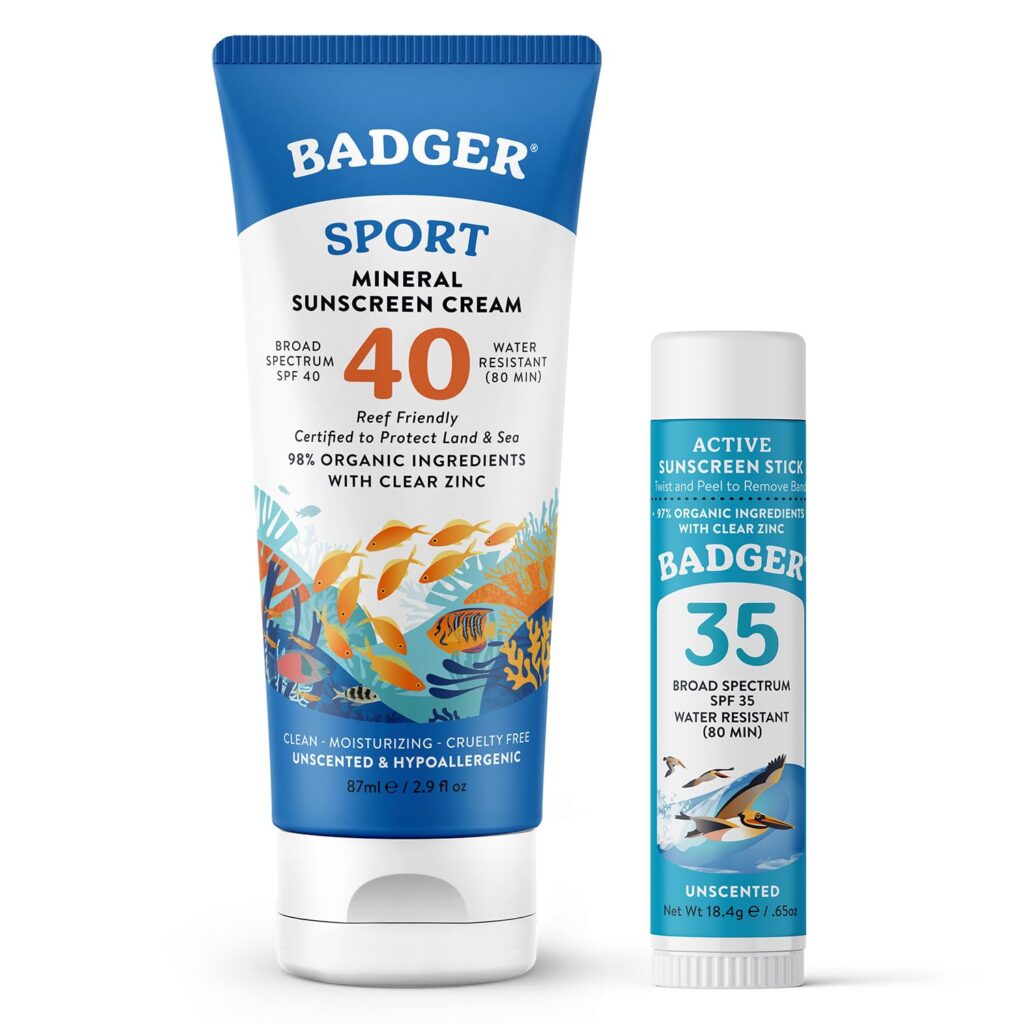
Why It’s My Top Pick: This zinc oxide-based formula has been my go-to for active outdoor days. Whether I’m trail running or kayaking, it stays put without that greasy feeling.
Key Features:
- 98% organic ingredients
- Water resistant for 80 minutes
- Non-nano zinc oxide (25%)
- Biodegradable formula
Texture & Application: Slightly thicker consistency that requires rubbing in thoroughly, but the light citrus scent makes application pleasant. There’s a minimal white cast that fades within minutes.
Best For: Athletes, outdoor enthusiasts, and anyone needing serious sweat resistance.
My Experience: I wore this during a 10-mile hike in full sun last August, and I didn’t burn at all. It did require one reapplication after swimming, but that’s expected.
Available at Amazon
2. ThinkBaby Safe Sunscreen SPF 50+
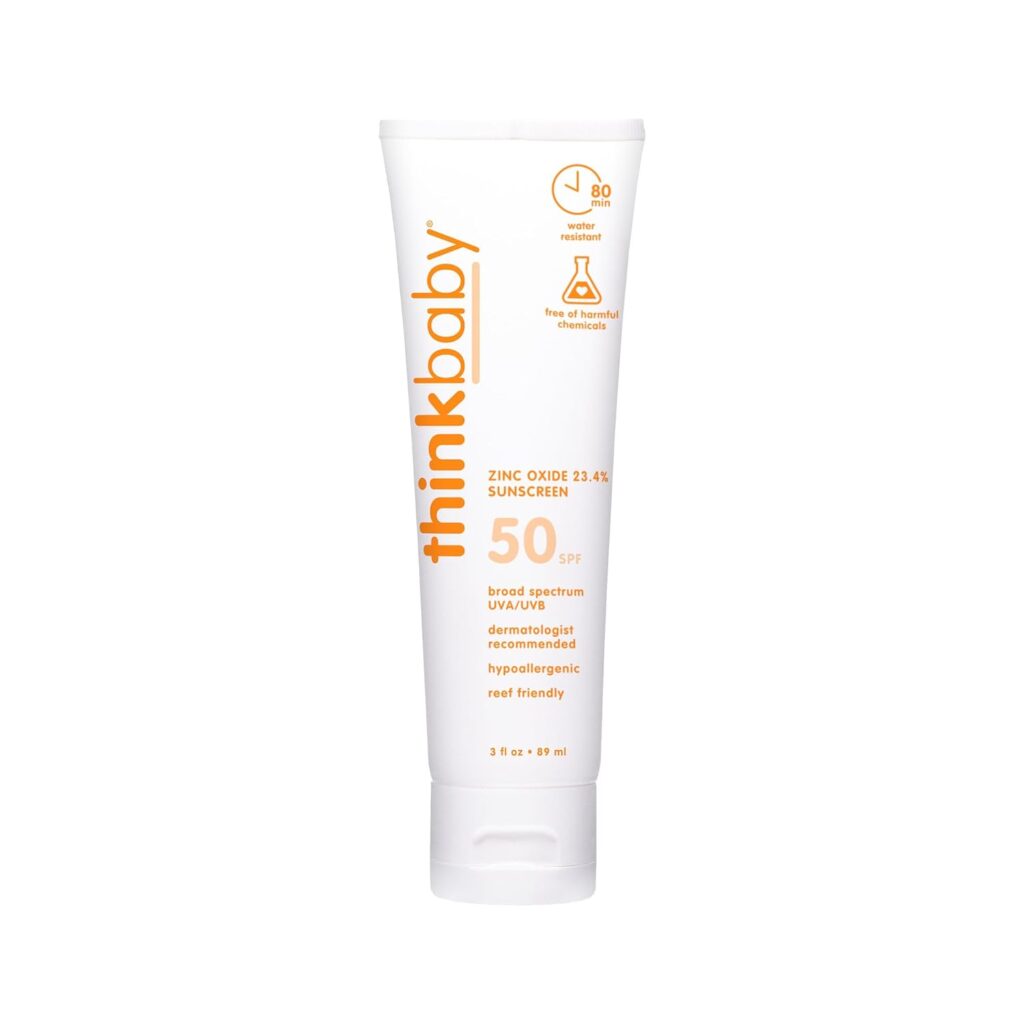
Why Parents Love It: As an aunt to three energetic kids, I’ve slathered this on countless times. It’s specifically formulated for babies and children, but works beautifully for adults too.
Key Features:
- EWG’s #1 rated sunscreen for six consecutive years
- 20% zinc oxide
- Fragrance-free and hypoallergenic
- Passes Consumer Reports testing
Texture & Application: Creamy, easy-to-spread formula that absorbs surprisingly well considering the high zinc concentration. The white cast is minimal, even on darker skin tones.
Best For: Families, sensitive skin, anyone seeking maximum protection.
My Experience: My niece has eczema-prone skin, and this is the only sunscreen that doesn’t trigger a reaction. We’ve used it on beach vacations with zero sunburns.
Available at Amazon
3. Blue Lizard Australian Sunscreen SPF 50+

The Smart Bottle Winner: This brand’s innovative bottle changes color in UV light—a helpful reminder of when sun protection is needed.
Key Features:
- Zinc oxide and titanium dioxide blend
- Unique Zinc Oxide + Titanium Dioxide formulation
- Water resistant for 80 minutes
- No parabens, fragrances, or PABA
Texture & Application: One of the most cosmetically elegant mineral sunscreens I’ve tried. It glides on smoothly and doesn’t leave that chalky finish.
Best For: Daily wear, face application, people who dislike typical mineral sunscreen texture.
My Experience: I use this as my everyday facial sunscreen. It sits beautifully under makeup and hasn’t caused any breakouts in six months of daily use.
Available at Amazon
4. All Good Sport Sunscreen SPF 30
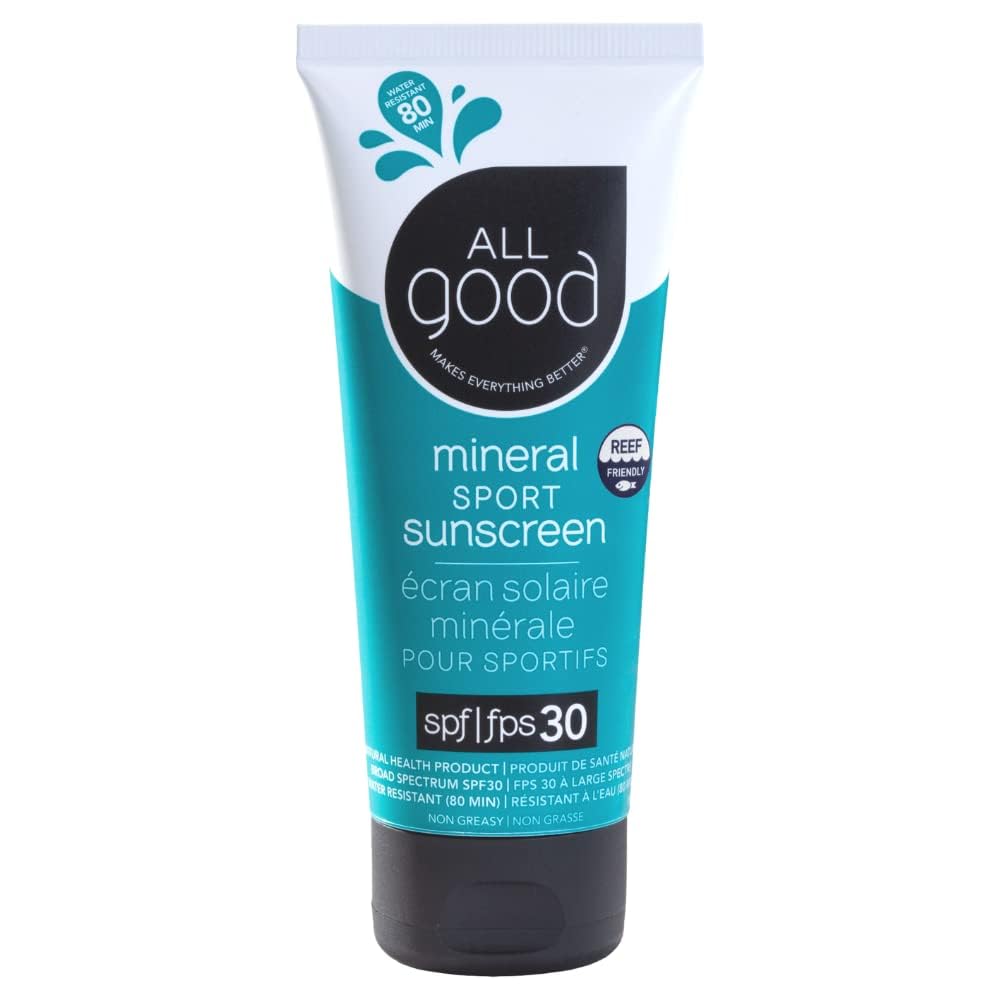
The Budget-Friendly Option: Effective sun protection shouldn’t break the bank, and All Good proves it.
Key Features:
- Certified organic by USDA
- 20% non-nano zinc oxide
- Reef-safe formula
- Vegan and cruelty-free
Texture & Application: Thicker consistency that takes effort to blend, but the protection is worth it. The slight coconut scent from organic ingredients is pleasant.
Best For: Budget-conscious consumers, daily use, body application.
My Experience: This is my pool day sunscreen. At around $15 per tube, I don’t worry about using generous amounts, which is crucial for proper protection.
Available at Amazon
5. Raw Elements Face + Body SPF 30
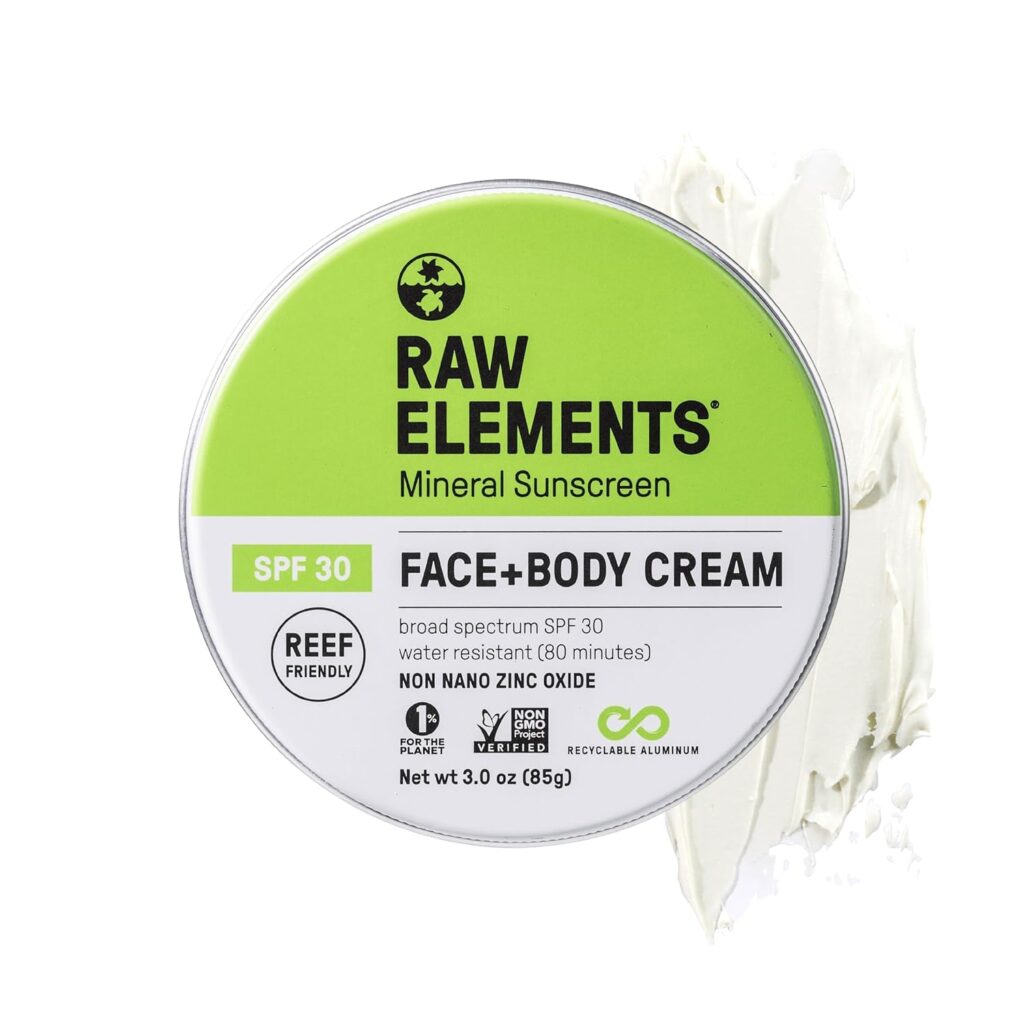
The Eco-Warrior’s Choice: Packaged in a plastic-free tin, this sunscreen aligns with zero-waste lifestyles.
Key Features:
- Certified plastic-negative company
- 25% non-nano zinc oxide
- USDA certified organic
- Reef-safe and biodegradable
Texture & Application: Solid stick format that you rub directly on skin. Takes more effort than cream formulas, but the environmental benefits are significant.
Best For: Environmentally-conscious consumers, travelers, minimalists.
My Experience: Perfect for backpacking trips where I want to minimize waste. The tin is TSA-approved and takes up minimal space in my pack.
Available at Amazon
6. Babo Botanicals Sheer Zinc Sunscreen SPF 30
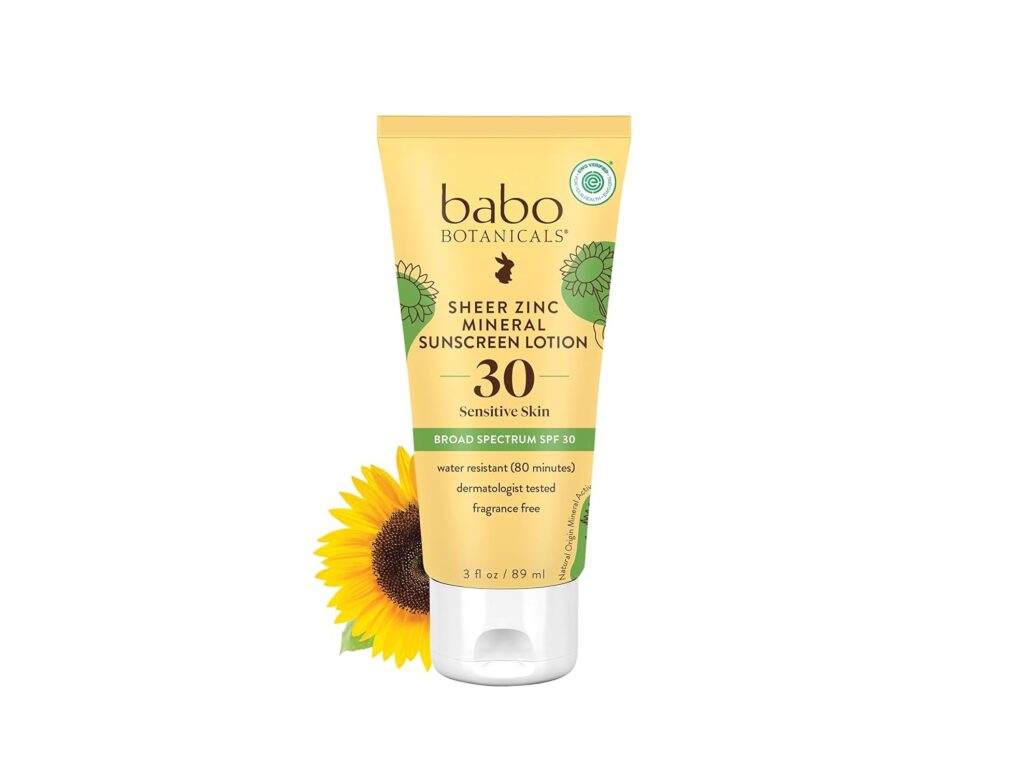
The Sensitive Skin Savior: Specifically formulated for reactive, sensitive skin without compromising protection.
Key Features:
- 24% zinc oxide
- EWG verified
- Fragrance-free with minimal ingredients
- Non-whitening formula
Texture & Application: Lightweight, sheer formula that truly lives up to its “non-whitening” claim. It’s one of the few mineral sunscreens that disappears on all skin tones.
Best For: Sensitive skin, rosacea-prone skin, people who hate white cast.
My Experience: After a friend with rosacea recommended this, I tried it during a particularly sensitive skin phase. No irritation whatsoever, and the sheer finish is impressive.
Available at Amazon
7. Goddess Garden Organics Sport SPF 50
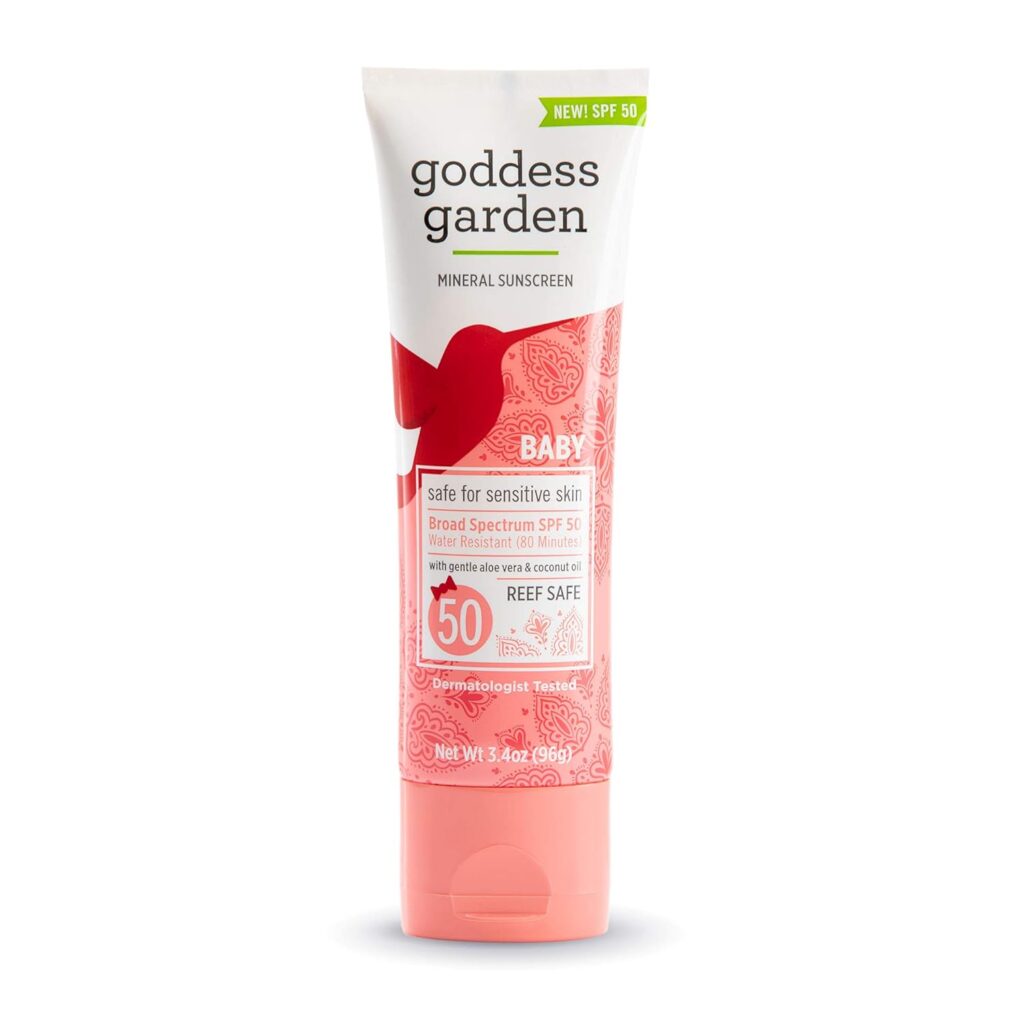
The High-Performance Natural Option: When you need maximum protection during intense outdoor activities, this delivers.
Key Features:
- Certified organic
- 20% zinc oxide
- Water resistant for 80 minutes
- Reef-safe formula
Texture & Application: Balances performance with natural ingredients beautifully. The texture is lightweight for a mineral sunscreen, though it does require thorough rubbing.
Best For: Athletes, water sports enthusiasts, intense sun exposure.
My Experience: I wore this during a full-day sailing trip with constant sun and water exposure. No burns, and it stayed effective through multiple swims.
Available at Amazon
How to Choose the Right Natural Sunscreen for You
With so many options, selecting the right natural sunscreen depends on your specific needs. Here’s my decision-making framework:
Consider Your Skin Type
Oily/Acne-Prone: Look for non-comedogenic formulas with a matte finish. Blue Lizard and Babo Botanicals work well.
Dry Skin: Choose sunscreens with added moisturizers. Raw Elements and All Good contain nourishing oils.
Sensitive Skin: Prioritize fragrance-free, minimal-ingredient formulas like Babo Botanicals or ThinkBaby.
Darker Skin Tones: Select “sheer” or “invisible” zinc formulas specifically designed to minimize white cast.
Match Activity Level to Formula
Daily Commute: SPF 30 lightweight formulas work perfectly for incidental exposure.
Beach/Pool Days: Choose water-resistant SPF 50 for extended water time.
Sports/Hiking: Sport formulas with sweat resistance are essential.
Casual Outdoor Time: Any SPF 30+ option provides adequate protection with timely reapplication.
Debunking Natural Sunscreen Myths
During my research, I encountered several misconceptions about natural sunscreen that need addressing:
Myth #1: Natural sunscreen doesn’t work as well as chemical versions
Reality: Studies show properly formulated mineral sunscreens provide equivalent protection to chemical sunscreens when applied correctly. The key is choosing SPF 30 or higher and reapplying every two hours.
Myth #2: The white cast is unavoidable
Reality: Modern natural sunscreens use micronized (but non-nano) zinc particles that significantly reduce or eliminate the white cast. Formulations have improved dramatically in recent years.
Myth #3: Natural sunscreen is only for sensitive skin
Reality: Anyone can benefit from mineral sunscreen’s photostability, immediate protection, and environmental benefits—not just those with sensitive skin.
Myth #4: You need less natural sunscreen than chemical sunscreen
Reality: Application amount matters more than sunscreen type. You need approximately one ounce (shot glass full) to cover your entire body, regardless of formula.
Myth #5: All natural sunscreens are reef-safe
Reality: While mineral sunscreens are generally better for reefs, check that formulas use non-nano particles. Some brands add other harmful ingredients that compromise reef-safety.
Application Tips for Maximum Protection
Even the best natural sunscreen fails if applied incorrectly. Here’s what I’ve learned about proper application:
The Right Amount
Most people apply only 25-50% of the recommended amount. For your face alone, you need about 1/4 teaspoon. For full body coverage, use approximately one ounce (enough to fill a shot glass).
Timing Matters
While natural sunscreen works immediately, I apply mine 5-10 minutes before sun exposure to ensure even coverage and let it settle into skin.
Reapplication Schedule
Every two hours during sun exposure Immediately after swimming or heavy sweating After toweling off, even if labeled “water-resistant”
Don’t Forget These Spots
Ears and ear tips Back of neck Tops of feet Hands (they age fastest!) Lips (use mineral lip balm with SPF)
Ingredient Red Flags to Avoid
When shopping for natural sunscreen, avoid these potentially harmful ingredients:
Oxybenzone – Linked to hormone disruption and coral reef damage Octinoxate – Another reef-damaging chemical filter Octocrylene – Can degrade into benzophenone, a potential carcinogen Homosalate – Suspected endocrine disruptor Parabens – Preservatives with potential hormone effects Synthetic Fragrances – Common allergens and irritants
The Environmental Case for Natural Sunscreen
Beyond personal health benefits, choosing natural sunscreen makes a genuine environmental impact. Studies estimate that 14,000 tons of sunscreen end up in coral reefs annually. Chemical filters, particularly oxybenzone and octinoxate, cause coral bleaching even at concentrations as low as 62 parts per trillion.
When I snorkeled in Hawaii last year, I saw firsthand the difference between protected reef areas and those exposed to heavy tourist traffic with conventional sunscreens. The visual contrast was heartbreaking—and motivating.
By choosing reef-safe natural sunscreen, you’re protecting:
- Coral reef ecosystems
- Marine life that depends on healthy reefs
- Coastal communities that rely on reef tourism
- Future generations who deserve thriving oceans
Storage and Shelf Life
Natural sunscreens typically have a shorter shelf life than chemical versions because they contain fewer preservatives. Here’s how to maximize your sunscreen’s effectiveness:
Storage Tips:
- Keep in cool, dry place away from direct sunlight
- Never leave in hot car (heat degrades active ingredients)
- Check expiration dates before each season
- Discard if texture, color, or smell changes
Shelf Life: Most natural sunscreens last 1-2 years unopened, 6-12 months once opened. When in doubt, replace it—expired sunscreen loses effectiveness.
Natural Sunscreen for Different Ages
Babies (6 months – 2 years)
Use sunscreen specifically formulated for babies like ThinkBaby. Prefer shade and protective clothing as first defense. Apply sunscreen only to exposed areas.
Children (2-12 years)
ThinkBaby and Badger Kids formulas work well. Teach proper application and make it fun with colorful packaging.
Teens and Adults
Any of the seven products I’ve recommended work beautifully. Consider activity level and skin type when choosing.
Mature Skin (50+)
Focus on moisturizing formulas with added antioxidants. Blue Lizard and Babo Botanicals offer gentle options that don’t emphasize fine lines.
Frequently Asked Questions About Natural Sunscreen
Is natural sunscreen really better than chemical sunscreen?
Natural sunscreen offers several advantages: it works immediately, rarely causes allergic reactions, doesn’t absorb into your bloodstream, and is safer for coral reefs. Both types can provide adequate sun protection when used correctly, but mineral sunscreens are generally considered safer for sensitive skin and the environment.
Why does natural sunscreen sometimes leave a white cast?
The white cast comes from zinc oxide and titanium dioxide reflecting light. However, modern formulations using micronized (not nano) particles have largely solved this issue. Tinted versions and sheer formulas are now available that blend seamlessly into all skin tones.
Can I use natural sunscreen under makeup?
Absolutely! Many natural sunscreens, like Blue Lizard and Babo Botanicals, work beautifully as a makeup base. Choose lightweight, sheer formulas and allow 5 minutes to set before applying cosmetics.
How often should I reapply natural sunscreen?
Reapply every two hours during sun exposure, or immediately after swimming, sweating heavily, or towel-drying. This rule applies to all sunscreens, regardless of type or SPF level.
Is SPF 30 enough, or should I use SPF 50?
SPF 30 blocks approximately 97% of UVB rays, while SPF 50 blocks about 98%. For daily incidental exposure, SPF 30 is adequate. For extended outdoor activities, beach days, or if you have fair skin, SPF 50 offers extra protection.
Can natural sunscreen cause breakouts?
While less likely than chemical sunscreens, some mineral formulas can clog pores in acne-prone individuals. Look for non-comedogenic formulas and lighter, sheer options like Babo Botanicals if you’re prone to breakouts.
Are natural sunscreens water-resistant?
Many natural sunscreens offer 40-80 minutes of water resistance. Check labels for specific ratings. Water-resistant doesn’t mean waterproof—reapply after swimming regardless of claims.
My Final Verdict on Natural Sunscreen
After two years of exclusively using natural sunscreen, I can confidently say the switch was one of the best health decisions I’ve made. Not a single sunburn, no skin reactions, and the peace of mind knowing I’m protecting both my skin and the environment makes it completely worthwhile.
The seven natural sunscreens I’ve recommended have proven themselves through countless outdoor adventures, daily use, and real-world testing. Whether you’re a weekend warrior, a concerned parent, or simply someone wanting cleaner skincare, there’s a natural sunscreen on this list that will work for you.
Remember, the best sunscreen is the one you’ll actually use consistently. Start with one of these options, apply generously and often, and you’ll be protecting your skin naturally and effectively.
Have you tried any of these natural sunscreens? I’d love to hear about your experiences or answer any questions in the comments below!